

As the UAE food economy grows, packaging has a bigger job to do
Growth across food production, hospitality and consumer brands is creating new opportunities in the UAE, while also changing what businesses need from their packaging.
The UAE food economy is expanding, and ambitions for the sector are significant. Through the UAE Food Cluster, the country is targeting an increase in the sector’s contribution to GDP from AED30 billion to AED40 billion by 2028, alongside growth in food-sector foreign trade from AED25 billion to AED40 billion and the creation of 20,000 additional jobs. In Dubai, almost 1,200 new restaurant licences were issued in 2024 alone, reflecting a wider ecosystem of food producers, hospitality operators, delivery businesses, farms, retailers and home-grown brands responding to a larger and increasingly sophisticated market.
Packaging is part of that growth story because it sits at the point where product protection, operations, brand experience and environmental expectations meet. As the businesses around it evolve, so too does the role packaging is expected to play.
The UAE packaging market was valued at an estimated US$10.84 billion in 2025 and is forecast to reach US$14.72 billion by 2031, with food already its largest end-user segment. Yet the more interesting story is not simply greater demand, but the changing nature of that demand.
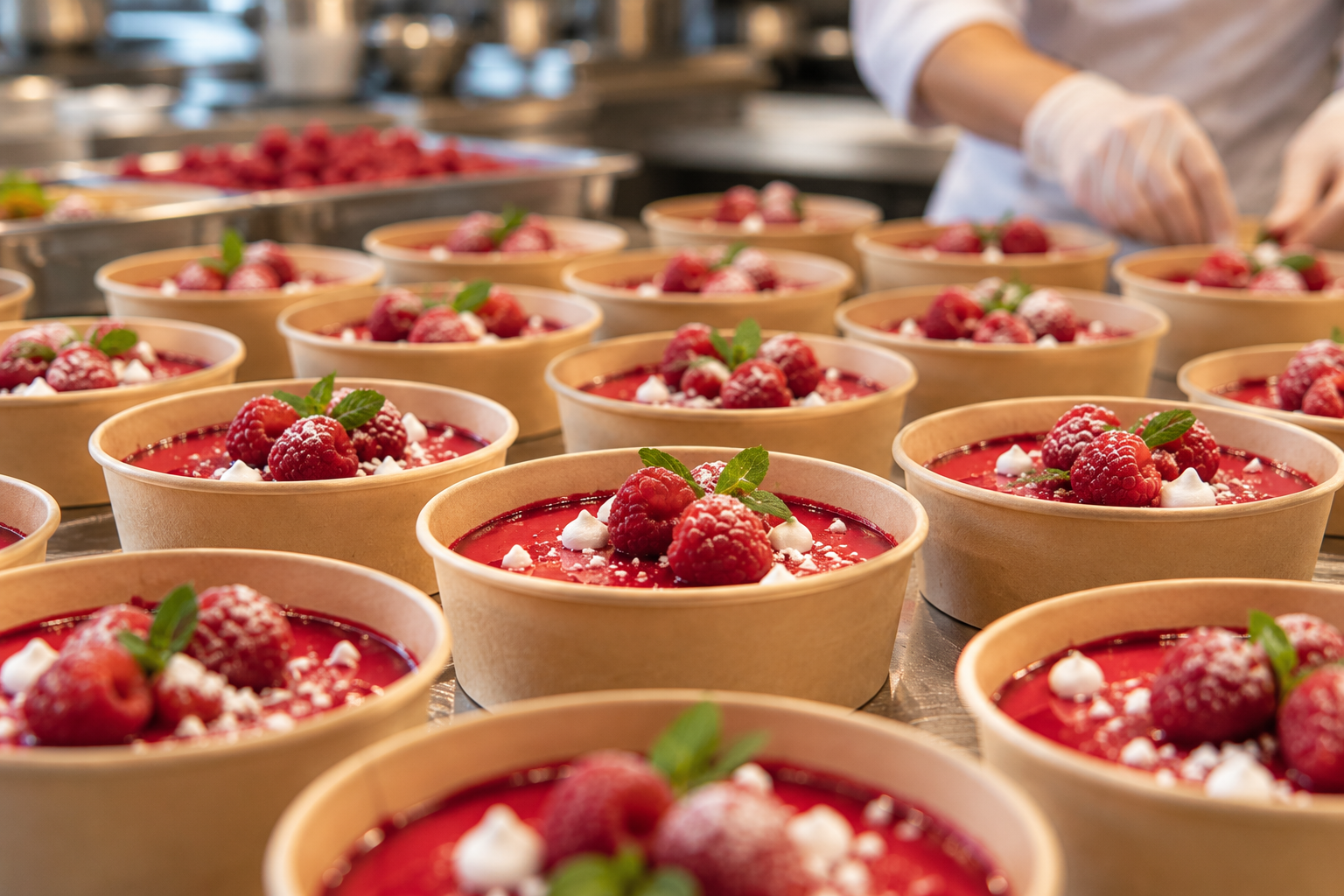
A food producer launching a new range may need packaging that protects the product through production, storage and distribution while also presenting it properly on shelf. A restaurant group may need formats that perform reliably across takeaway, delivery and catering. A growing consumer brand may require greater visual distinction or the flexibility to move from smaller runs to larger volumes without losing consistency.
The more useful question is therefore no longer simply what packaging do we need? but what does this packaging need to do for the business?
The answer depends on context: what is being packed, how it is filled and stored, the journey it makes, the conditions it needs to withstand and the experience expected at the other end. Requirements also change as businesses introduce new products, enter new channels or expand into new markets, which means the right solution is the one that continues to perform as the business evolves.
Responsible choices are becoming more nuanced
Sustainability is one of the biggest influences on packaging decisions today, but it is also an area in which businesses increasingly need clarity rather than simple claims.
In the UAE, the second phase of federal restrictions on specified single-use products came into effect on 1 January 2026, covering categories including plastic beverage cups and lids, cutlery, plates, straws and stirrers, as well as food containers made from expanded polystyrene.
The significance of this shift is that the conversation is becoming more sophisticated. Replacing one material with another does not automatically produce a better outcome, because different products have different performance requirements and materials have different end-of-life routes depending on the infrastructure available in each market.
Responsible packaging therefore starts with asking better questions. Can unnecessary material be removed? Is there a more appropriate format for the application? Would a recyclable or recycled-content option perform properly in practice? Can an environmental claim be substantiated? And, critically, will the packaging continue to protect the product and support food safety, shelf life and transport requirements?
A solution that appears environmentally preferable but results in damaged products or greater food waste may simply shift the impact elsewhere. There will rarely be one material or format that is right for every application, which makes informed decision-making more important than broad labels or assumptions.
Packaging is also part of the customer experience
For many food and hospitality businesses, packaging is now one of the most frequent physical interactions a customer has with the brand. Delivery has made this especially visible: a customer ordering from home may never experience the restaurant interior or presentation at the table, but they will experience the food and the packaging in which it arrives.
The same applies on a retail shelf, where packaging not only protects the product but also communicates quality and identity. Print quality, colour, design and customisation can all help a business establish a stronger presence and maintain consistency across customer interactions.
That does not mean packaging needs to become louder or more elaborate. It simply means it can no longer be considered entirely separately from the experience around the product.
Better decisions will define what comes next
There is unlikely to be one material, technology or format that defines the next generation of packaging. Instead, businesses will need to balance performance, operational fit, brand presentation, changing regulation and responsible material use together rather than in isolation.
For packaging manufacturers, that raises the expectation too. The role is increasingly about helping customers understand those choices and arrive at a solution that works for the specific application, rather than simply supplying a standard product.
At VerraPak, that is how we see the opportunity: helping businesses make packaging decisions with greater clarity and confidence as the UAE food economy continues to evolve.
VerraPak: Package with confidence.
Introducing VerraPak: the next chapter in our story
As the UAE food economy grows, packaging has a bigger job to do
Updates from VerraPak and practical perspectives on packaging, manufacturing, brands and the region’s evolving food ecosystem.
Company news